• Increase font size
  • Default font size
  • Decrease font size
Home Cass Meurig and Nial Cain

Cass Meurig and Nial Cain : Deuawd

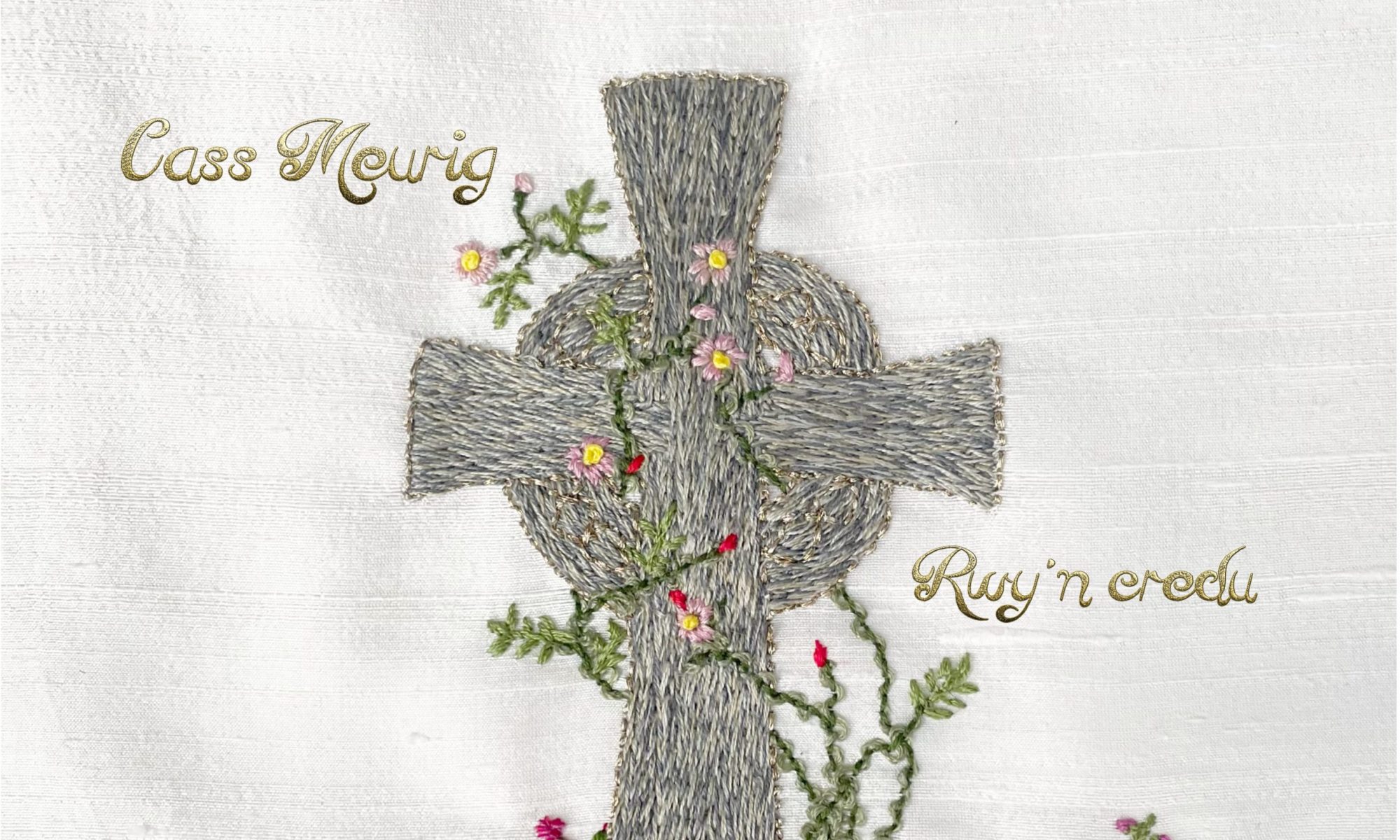
pic of Cass and Nial pic of album cover

'unusual and beautiful... a delight'  SONGLINES

'contemplative but quietly daring to be different. A huge thumbs up' FROOTS

'seriously enchanting'  LIVING TRADITION  http://www.livingtradition.co.uk/webrevs/cd323h.htm

'There is magic throughout this exceptional album' - Rock n Reel

‘A little pearl of an album’ - Daily Post

‘Beautiful’ - Frank Hennessey, Radio Wales

'Lovely' Huw Stephens, C2 Radio Cymru

'Vision, colour and talent' Barn

Deuawd, ond of the releases of 2009, as a whole wafts me back to first listening to Martin Carthy and Dave Swarbrick in the 1960s and the realisation of how potent two musicians playing acoustic instruments could truly be. Music as total brain food.' Ken Hunt  http://en.world.freemusic.cz/index.php/giant-donut-discs-october-2009/

'A heartwarming and intimate album, and one we can be privileged to share'  Taplas

'Hyder tawel ddiymhongar, naws hypnotig, yn eich tynnu i fewn yn ara deg, gwreiddioldeb, offeryniaeth wych... CD y flwyddyn i fi heb os.' - maes-e.com  http://www.maes-e.com/viewtopic.php?f=5&t=27920


A new release from Fflach:tradd, Deuawd sees fiddle and crwth player Cass Meurig team up with guitarist Nial Cain. Nial was a founder member of Flop Eared Mule, which later became the Old Rope String Band, and also played with Tyneside’s legendary oldest extant ceildh band The Borderers, where he learned to play the fiddle from the great J Forster Charlton. A skilled violin maker and restorer, he now plays with the excellent local twmpath band Aderyn Prin.


As a duo Cass Meurig and Nial Cain bring together tunes and songs from deep within the Welsh tradition with their own compositions. Their music ranges from lively dance tunes to songs and quiet, introspective airs. Expressive fiddle playing is combined with the rich, earthy textures of the crwth and a driving yet sympathetic guitar accompaniment, all bound together by Cass’s warm, natural voice. An unusual and innovative performance.


In their own words, ‘As a duo we aim for the conversational, the intimate, a dialogue between old friends. Coming from the stark beauty of the mountains of North Wales and the warmth of shared music around a fireside, our music is respectful of the tradition and is played from the heart.’


Previous appearances include Lorient Festival Interceltique, Tenby Folk Festival, and Fiddle Festival of Wales (2008) and Celtic Connections, Glasgow (2007). Forthcoming appearances in 2010 include Snowdon Fiddle Festival and Gower Folk Festival.


To contact Cass and Nial email cass at cassmeurig dot com.


NOTES ON THE TRACKS

1. Caru yn y Coed. Cerdd y Gog Lwydlas. Lliw Lili ymysg y Drain.
(Courting in the woods. The grey-blue cuckoo’s song. The colour of a lily among the thorns)


Fel yr oeddwn i yn rhodio, a nghalon fach yn brudd
Ar ddydd Llun y bore, ar doriad y dydd
Mi glywais y gwcw, yn hynod iawn o fwyn
Ar ochr bryn uchel yn ymyl y llwyn.
As I was walking, and my little heart sad,
On Monday morning, at the break of day
I heard the cuckoo, strangely sweet,
On the side of the hill by the bush.
Pan glywais ei hadlais yn tiwnio mor fwyn
Ar ochr bryn uchel ar frigau pen y llwyn
Mi ofynnais iddi gwesiwn, yn ddifri a diwâd,
Ble buost ti’r gywen mor hir o dy wlad?
When I heard her echo singing so sweetly
On the side of the high hill on the bush’s twigs
I asked her a question, seriously and honestly
Where were you for so long from your country?
Mi fues i yn rhywle, ni wn yn iawn ymhle
Yn gorwedd yn farwaidd, yn gaeth iawn fy lle
Yn llechu ac yn cysgu mewn lloches dros dro
A nawr cefais gennad i ganu yn eich bro
I was somewhere, I’m not sure where
Lying as if dead, confined to my place,
Sheltering and sleeping in temporary shelters
And now I have permission to sing in your land.
Fy amser i ganu yw Ebrill a Mai
A hanner Mehefin, chwi wyddoch bob rhai
I ffwrdd yr af i ymaith, fy nghywion sydd fân
A chyn Dydd Gwyl Ifan fe dderfydd fy nghân.

My time to sing is April and May
And half of June, as you all know,
I will go away, my chicks are small
And before Ifan’s festival my song will cease.

Cass learned Caru yn y Coed from fiddler Dan Morris. Nial learned Cerdd y Gog Lwydlas from Martin Gill and Pauline Down. Lliw Lili ymysg y Drain is another old slow air, played here as a jig.
2. Beddgelert. Pêr Alaw. (Beddgelert. Sweet tune).
Beddgelert (the name of a village in Snowdonia) comes from the Anglesey fiddler Morris Edward’s collection of tunes, dated 1778/9. There is a contemporary reference to the tune in a letter from Richard Morris to his brother Lewis in which Morgan Jones of Dinas Mawddwy is said to have sung verses to Beddgelert in a style called ‘canu pedwar ac acennu’ (singing four and accenting). The style was so archaic at the time that Richard hoped his brother had notated it in case it were lost forever – as, sadly, it was. Pêr Alaw is known by various names, most commonly Sweet Richard, and was popular in the eighteenth century. This version is our own, but based on one found in North Wales fiddler John Thomas’s manuscript, dated 1752
3. Brithi i’r Buarth. Pen y Bwlch (Brithi to the yard. Pen y Bwlch).
Hai hai ho, Brithi i’r buarth Hai hai ho, Brithi (the speckled one) to the yard,
Hai hai ho, Brithi, hai hai ho Brithi fach... Hai hai ho, Brithi, hai hai ho little Brithi...

Hai hai ho, Seren i’r buarth Hai hai ho, Seren (Star) to the yard,
Hai hai ho, Seren, hai hai ho Seren fach... Hai hai ho Seren, hai hai ho Seren fach...

A cow-calling song collected by Iolo Morganwg in the late eighteenth century. He includes a note that ‘this also, and others, are often varied very much, and adapted to penillion of various metres. These chants are often tuned with the words huw huw by nurses to lull infants to sleep.’ Pen y Bwlch is a farmhouse above Cwm-y-Glo with a beautiful view over Llyn Padarn to Snowdon and Elidir. Cass’s favourite dog walk (she wrote the tune).
4. Mwynen Merch (The gentle maid). Ravenscroft’s Hornpipe. The Presbyterian Hornpipe
Mwynen Merch is an old song; the melody is recorded amongst others by Nicholas Bennett in Alawon fy Ngwlad (1896). Ravenscroft’s Hornpipe, an example of 3/2 ‘Lancashire’ hornpipes is in the Welsh fiddler John Thomas’s manuscript. Nial learned the Presbyterian Hornpipe from fiddler Chris from Coedllysisaf, Sanclêr.

5. Gafot. Hoffedd Gwilym. Hoffedd Ceinwen (Gavotte, Gwilym’s delight. Ceinwen’s delight)
The Gavotte was taught to Cass by Breton guitarist Dom Duff. Hoffedd Gwilym and Hoffedd Ceinwen were written by Cass for her two elder children.

6. Ty Gwyn (White house).
Nial learned this tune from his ceilidh band Aderyn Prin. It is attributed to Band y Brodyr in Cadw Twmpath, ed. R. H. Bowen.

7. Pebyll Penon (The tents of Penon).

A version of Bugeilio’r Gwenith Gwyn (Watching the white wheat) recorded by Iolo Morganwg.
8. Consêt Ifan Glan Teifi. Amor Alis. Rhuban fy Morfudd (Evan Glan Teifi’s conceit. Amaryllis. My Morfudd’s ribbon)
Mae ’nghariad i ’leni yn byw’n y ty fry
A pherllan o afalau wrth dalcen ei dy
Rwy’n un o’i gariadon o bedair ar ddeg
Rwy’n siwr o gael afal cyn gynted â neb.

Mae ’ngariad i ’leni fel gwynt o flaen glaw
Yn caru’r ffordd yma a charu’r ffordd draw
Ond gwir gywir galon, ni châr ond yr un
Y sawl a gâr lawer gaiff fod heb yr un.

Ti y mab a’r galon helaeth
Sydd yn caru tair ar unwaith
Dweda im y gwir yr awron
Sut mae cadw tair yn fodlon?

Caru un ar hyd fy mreichiau
Caru’r ail â mwynion eiriau
Caru’r drydedd yn fy nghalon
Dyna gadw tair yn fodlon!

My lover this year lives in the house up there
And an orchard of apples in front of his house
I’m one of his fourteen sweethearts
I’m sure to get an apple as soon as anyone.

My lover this year is like wind before rain
Courting here and there
But a real true heart only loves one,
Those who love many will be left with no-one.

You the lad with the generous heart
Who loves three at once
Tell me the truth now
How do you keep all three happy?

Courting one in my arms
Courting the second with sweet words
Courting the third in my heart
That keeps all three happy!

Old verses set to old tunes. Consêt Ifan Glan Teifi dates back to at least the seventeenth century, if it is the ‘farwell Ieauan glyn Tivy’ listed in Philip Powell of Brecon’s ‘Lute Leasons’ (1633). The earliest recorded version is in John Thomas’s manuscript (1752). Amaryllis derives from an English pastoral song and was popular with Welsh ballad writers during the eighteenth century, although there are several tunes of this name. Our tune is from Nicholas Bennett’s Alawon fy Ngwlad (as is Rhuban fy Morfudd) but other Amaryllis tunes were recorded by John Thomas and Morris Edward.
9. Ty Renlim (Renlim House). Three Day Flu.
Two hornpipes written by Nial. Renlim House was written for Julie and Lele (their house). Three day flu was written on the fourth day.

10. Tair Meillionen (Three clovers).
Three versions of the dance tune Meillionen. Associated with a mansion of the same name near Beddgelert, it was popular during the eighteenth century both as a hornpipe and a slow air and was recorded by John Thomas and, unusually for a Welsh tune, published in London in Walsh’s Caledonian Country Dances (1733). We learned the minor versions from piper and flautist Ceri Matthews.
11. Deio. Cwyd dy Galon. Dawns y Tylwyth Teg (Deio. Lift your heart. The fairy dance)
Deryn Corff ddywedodd imi
Y bydd rhywun farw eleni
Cwyd dy galon, paid a chwynfan
Nid oedd hwnnw ond tylluan.
Ci yn udo, nos yn ole
Newydd drwg ddaw yn y bore;
Udo’r oedd yn ôl arferiad
Ar y dyn sydd yn y lleuad.

Ceiliog yn y nos yn canu
Sydd yn arwydd caf fy nghladdu;
Ond cyn hynny drwy drugaredd
Gallwn fyw am drigain mlynedd

Un frân ddu, daw anlwc eto
Does i mi ond poen ac wylo
Cei weld digon, cwyd dy galon
Pan ddaw’r brain i gyd â chywion.

The bird of death told me
Someone would die this year
Lift your heart, don’t complain,
It was only an owl.
A dog howling on a moonlit night,
Bad news will come in the morning;
It was howling according to its custom
At the man in the moon.

A cockerel crowing in the night
Is a sign that I will be buried;
But before that by mercy
I could live for sixty years.

One black crow, bad luck will come again,
Only pain and crying remains for me;
You can see enough, lift your heart,
When the crows have chicks.

Words from the song Cwyd dy Galon are here set to our version of the well-known song-tune Wrth fynd efo Deio i Dywyn. Dawns y Tylwyth Teg is a popular session tune all over the British Isles and Ireland, usually played in the major.
12. Gwên Sali. Plentyn Gwanwyn (Sally’s smile. Spring child)
Darfu’r gaeaf, darfu’r oerfel,
Darfu’r glaw a’r gwyntoedd uchel,
weli di weli di ’nghariad i,
Daeth y gwanwyn glas eginog,
Dail i’r llwyn a dôl feillionog.
weli di weli di ’nghariad i.

Croeso’r gwanwyn tawel cynnar
Croeso’r gog a’i llawen lafar
weli di weli di ’nghariad i.
Croeso’r tes i rodio’r gweunydd,
A gair llon, ac awr llawenydd
weli di weli di ’nghariad i.
Fis cyn Clanmai cân y cogau
Fis cyn hynny tyf y briallu
weli di weli di ’ngharia

The winter is past, the cold is past,
The rain and the high winds are past;
you see you see my love.
The green budding Spring has come,
Leaves to the grove and a clovered meadow.
you see you see my love.

Welcome to the quiet early Spring,
Welcome to the cuckoo and her happy song
you see you see my love.
Welcome to the sunshine to walk on the moors,
And a happy word, and an hour of joy
you see you see my love.
A month before May day the cuckoo sings
A month before that the primroses grow
you see you see my love.

Gwên Sali was written by Nial for his dog who smiles when greeting people. Plentyn Gwanwyn was written by Cass for her friend’s daughter Leah Rose, who was born in Spring 2008. The words are traditional verses.


A NOTE ABOUT THE COVER....

The carved slate on the cover of Deuawd is an exceptional surviving piece of a folk art which was once widespread in the slate valleys of North Wales.

This folk art of slate carving flourished for a comparatively short period of thirty to forty years at the beginning of the nineteenth century, and coincided with a major period of expansion of the quarries. Incoming workers in large numbers necessitated the building of many of the tyddynod – the cottage smallholdings which dot the mountainsides. Many of the larger carved pieces were made as original house decoration to these buildings - decorated fireplace surrounds primarily, but also seen are objects down to the size of miniature doll sized shoes, or even small chests of drawers complete with brass pin handles. Particularly interesting are the long thin slates which are something of a mystery, but are tentatively thought to have been to provide an ornamental infill between the legs of finer furniture, precious enough to be raised on a decorated slate plinth to keep it from the ravages of the cottage’s damp earth floor. These slates are often executed with the most extreme care and can be a technical tour de force - but with a quite different approach to that which would be taken by a trained hand, for example by a monumental mason. picture of slate carvings

Interestingly several show music. And buildings, ships, plants, wineglasses. clocks animals, birds, sunwheels, even a zodiac. bird with clock slate carving
But the most common motif is concentric circles and these were not carved freehand, but with a special set of tools used in a brace. It is tempting to attribute a symbolism to motifs and their disposition, but if any existed it is now lost

Very few dated slates exist after the 1840’s, and it is surmised that when the quarries began to employ trained carvers to make elaborate fireplaces at about that period, the naïve slates were compared unfavourably and sadly became unfashionable.

The carving on the main cover is a large fragment from a fireplace surround and can be seen at Gwynedd Museum. The sunwheel on the cd itself is the centre of a long slate which is in a private collection. pic of slateThe water horse or sea serpent on the inner cover appears with ships on another long slate in the same collection. slate carving slate carving

Like the best folk art – a fine tribal rug, an Amish quilt, or indeed a great song - the carved slates are skilfully and painstakingly created yet come straight from the heart and are correspondingly moving. Anyone wishing to learn more is recommended to obtain Llechi Cerfiedig Dyffryn Ogwen – The Carved Slates of Dyffryn Ogwen, by Gwenno Caffell, Llandegai and Llanllechid Archeological Society ISBN 0 7200 0278 8, Published by the National Museum of Wales, Cardiff. There is also a small but excellent collection of carvings on display (including the slate from the cover), at Gwynedd Museum and Art Gallery in Bangor.


Cymraeg - English

Cymraeg (Welsh)   English (United Kingdom)

Contact Cass

Anti spam question: what does a typical person smell with? A. thier...
Email:
Subject:
Message:

Newsflash

'Deuawd' gan Cass Meurig a Nial Cain: 'unusual and beautiful... a delight'  SONGLINES  'contemplative but quietly daring to be different. A huge thumbs up' FROOTS

Design by i-cons.ch / etosha-namibia.ch